


Basements earn a bad reputation for a reason. Below-grade rooms trap moisture, hold cool air against concrete walls, and quietly feed the musty smell that creeps into everything stored down there. A dehumidifier pulls that excess water out of the air before it turns into mold, rust, or warped cardboard, and the right one for your space depends on square footage, noise tolerance, and how hands-on you want to be with drainage. This shortlist covers compact units for tight corners, mid-size workhorses for finished rec rooms, and high-capacity picks for damp, sprawling basements. Each entry below is matched to a different ownership scenario, so you can match the machine to the room rather than the other way around.
The Picks In Brief

PSOS 98 OZ Dehumidifier for Home 1000 sq.ft (Gray)

AEOCKY 50 Pint/Day Ultra-Quiet 40dB Dehumidifier 3500 Sq.Ft with Drain Hose

AEOCKY 4500 Sq.Ft Energy Star Dehumidifier with Pump and Drain Hose (80 Pint/Day)
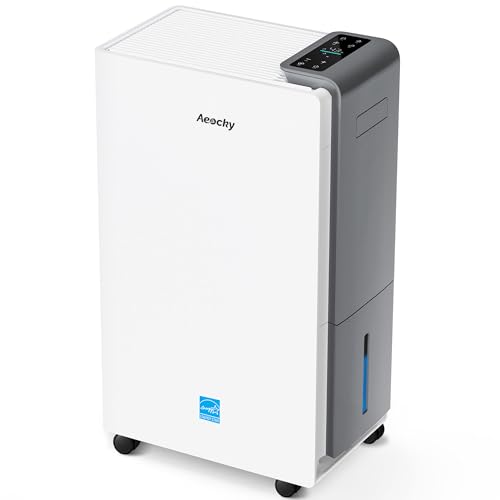
AEOCKY 5500 Sq.Ft Energy Star Most Efficient 2025 Dehumidifier Max 80 Pint/Day
More Details On Our Top Picks
The PSOS 98 OZ Dehumidifier suits small basements, bonus rooms, and finished corners where you want moisture control without a compressor roaring in the background. It uses dual semiconductor condensation (a thermoelectric cooling method that pulls water from the air without a refrigerant cycle), which keeps operation quiet enough for a nearby bedroom or home office. The 98-ounce internal tank is large for a thermoelectric unit, so you spend less time walking downstairs to empty it.
The footprint stays modest, the gray housing blends with utility-room shelving, and a built-in humidity display lets you read the room at a glance. For most small basements in mild climates, this is a tidy, low-hassle option.
Everyday Advantages
- Thermoelectric operation runs quietly enough for adjacent living space
- 98 oz tank means fewer trips downstairs to dump water
- Compact body fits on a shelf or in a closet corner
- Auto shut-off protects the unit when the tank fills up
- Ambient color light doubles as a soft night indicator
Things To Consider
- Semiconductor models pull less moisture per day than compressor units, so very damp basements may stay muggy
- Performance drops noticeably once room temperature falls below roughly 60°F
- Tank emptying becomes the main upkeep chore since there’s no built-in drain option
Who It Suits Best
Basement dwellers with a small, moderately damp finished room in a temperate climate who want a quiet, low-maintenance unit.
Where Another Pick Suits Better
For a finished basement that doubles as a TV room, the AEOCKY 50 Pint/Day model handles higher humidity with less babysitting.
The AEOCKY 50 Pint/Day Ultra-Quiet model steps up to a proper compressor system (a refrigerant-based pump that chills coils to condense moisture, the same tech as a fridge) while keeping noise near a 40 dB hum, roughly the sound of a quiet library. The 3500 sq ft rating handles a typical finished basement with room to spare, and a continuous drain hose port means you can route water to a floor drain and forget about it.
Compared to the PSOS unit above, this one pulls substantially more water per day, which matters the moment your basement starts smelling like a wet towel. You trade thermoelectric silence for true dehumidifying muscle.
Strong Points
- Compressor-driven extraction tackles serious basement dampness
- 40 dB operation stays background-quiet during movie nights
- Drain hose hookup removes the daily empty-the-bucket routine
- 3500 sq ft rating covers most single-room basements with margin
Trade Offs
- Heavier and bulkier than the PSOS thermoelectric option, so moving it between rooms takes effort
- Compressor units release a small amount of heat, which can nudge room temperature up a few degrees in summer
Feature Snapshot
Right Fit For
Anyone with a finished basement that doubles as a TV room, gym, or play area and wants real extraction without the typical compressor racket.
Look Elsewhere When
For a basement with no floor drain and no patience for swapping tanks, the AEOCKY Energy Star with Pump pushes water uphill automatically.
The AEOCKY 4500 Sq.Ft model tackles the worst-case basement: large square footage, a sump pump nowhere nearby, and an upstairs neighbor who’d rather not hear a drain line gurgling. The built-in condensate pump (an internal motor that pushes collected water vertically through a hose) pushes water upward and out to a sink, window, or remote drain, so the unit can sit in the deep corner where moisture collects most.
With a 4500 sq ft ceiling and 80 pint-per-day extraction, this is a step up in both reach and grunt. Owners of large damp basements often lean on this category for set-and-forget operation.
The Upside
- Integrated pump eliminates the need for a nearby floor drain
- 80 pint daily extraction handles severe, persistent dampness
- Intelligent humidistat (a sensor that reads room humidity and cycles the compressor on and off to hold your target level) keeps the room at your chosen setting without manual tweaks
Worth Noting
- Internal pump adds moving parts, so expect a small uptick in long-term maintenance compared to gravity-drain models
- Larger chassis needs floor space, not a shelf
Made For
Large basements, crawl-space conversions, and homeowners who want pump-driven drainage routed to a utility sink without manual emptying.
Not Your Match When
For smaller finished basements where quieter 40 dB operation matters more than raw extraction, the AEOCKY 50 Pint/Day is a friendlier fit.
The AEOCKY 5500 Sq.Ft Energy Star Most Efficient 2025 dehumidifier is the heavyweight of the group, with the largest coverage rating on the list and the same 80 pint-per-day extraction as the previous pick. It targets sprawling basements, whole-home dehumidification tied into a return duct, and workshops where humidity threatens tools and stored lumber.
Compared to the 4500 sq ft pump model, the trade is reach for footprint. You give up the internal pump in favor of a wider coverage ceiling, which suits setups with a gravity drain already in place.
What Helps Most
- 5500 sq ft rating covers extra-large finished basements with confidence
- Energy Star Most Efficient 2025 designation hints at lower running cost over months of continuous use
- 80 pint daily capacity matches the pump-equipped model for raw moisture removal
Honest Caveats
- No internal pump, so drainage relies on a gravity floor drain or a sink at a lower elevation
- Size and weight make this a semi-permanent install rather than a portable option
Best Suited To
Homeowners with a sprawling, frequently damp basement who already have a floor drain and want the biggest, most efficient compressor on the list.
Reach For A Different Pick When
For basements without a gravity drain, the AEOCKY 4500 Sq.Ft model with built-in pump handles the same water output without routing headaches.
What Matters Most Before Choosing Dehumidifiers For A Basement
Match Capacity To Square Footage, Not Hope
A unit rated below your room size will run constantly, struggle to hit your humidity target, and wear out its compressor faster. For basements under 1500 sq ft with mild dampness, a 30 to 50 pint model handles the workload. Rooms above 2000 sq ft or those with visible moisture on walls typically need 50 to 80 pint capacity. Over-sizing costs more up front but lets the compressor cycle off instead of grinding nonstop.
Compressor vs Thermoelectric, Plainly
Compressor dehumidifiers use refrigerant coils and pull serious moisture, even in cool 50°F basements. Thermoelectric (or “semiconductor”) models use no refrigerant, run quieter, and weigh less, but they work best in warm, small spaces and lose capacity fast as temperatures drop. Cool, stone-walled basements almost always need a compressor.
Drainage Changes Everything
A built-in tank means weekly trips downstairs. A continuous drain hose port paired with a nearby floor drain turns the unit into a set-and-forget appliance. An internal condensate pump lets you route water uphill to a sink or window when no gravity drain exists. Picking the right drainage setup often matters more than the moisture rating.
Noise And Placement Run Together
A 40 dB compressor hum disappears behind a closed basement door but stands out in an open-concept basement living area. For multipurpose basements that double as media rooms, prioritize lower noise ratings. For utility-only basements, raw capacity wins.
Key Considerations Across These Picks
Pitfalls Shoppers Hit
The most common mistake is buying a thermoelectric unit for a cold, stone-walled basement and wondering why humidity never drops. Another is ignoring drainage: a high-capacity compressor with no drain hookup means hauling full tanks every few hours. A third slip is trusting coverage ratings as gospel, since real-world extraction drops when temperatures fall or doors stay open.
Where The Extra Money Goes
Higher-tier models earn their cost through bigger compressors, longer-lived coils, internal pumps, and efficiency certifications that trim monthly power bills. For large, persistently damp basements, the upgrade pays for itself in lower energy use and fewer manual interventions. For small, temperate rooms, a mid-range compressor is the sweet spot where spending more stops paying back.