


A 1,000-square-foot home can feel like a very different place depending on whether you live with damp basements, coastal air, or a stuffy bedroom that never quite dries out. The right dehumidifier pulls moisture quietly in the background, so you stop noticing sticky sheets, foggy windows, and that musty closet smell. This list walks through eight options built for that exact size, from whole-house workhorses to compact bedroom units that look at home on a nightstand.
The Main Contenders

Waykar 145 Pints High Efficiency Dehumidifier with Pump

Davis Air-Dryr 1000 Marine Air Dryer Dehumidifier

Waykar 34 Pints 2025 Energy Star Dehumidifier for Home

Waykar 150 Pint 2025 Energy Star Dehumidifier with Pump

Tenergy Sorbi 1000ml Air Dehumidifier with HEPA

Spacekey 95 OZ Dehumidifier for 1000 Sq. Ft

VEAGASO 34 Pint/D Dehumidifier for Basement
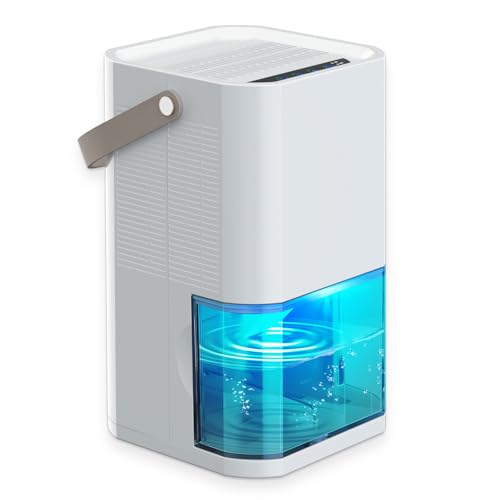
Litever Dehumidifier Dual Core Small Quiet
The Picks, Examined More Closely
Big basements and garage workshops are the natural home for this Waykar. The 145-pint-per-day rating refers to moisture pulled at 95°F and 90% relative humidity (RH), which is a standard test condition for the category, and the room coverage tops out near 6,500 square feet. A built-in pump pushes condensate (collected moisture water) up and out through a hose, so the unit does not have to sit next to a floor drain.
Unlike the smaller Waykar 34-pint pick later in this list, this one is designed to run almost unattended. For a homeowner who has fought a damp crawl space for years, that hands-off drainage is the main reason to pay more.
Positive Takeaways
- Built-in condensate pump removes the need to empty a tank during long runs.
- Adjustable humidity range of 30% to 80% lets you tune the room rather than overshoot.
- Energy-conscious compressor pulls 145 pints per day under standard test conditions, helping lower run time.
- Auto-defrost function prevents the coils from icing in cooler basement temperatures.
Points To Keep In Mind
- Footprint and weight are considerable, so plan a permanent spot rather than rolling it between rooms.
- Overkill for a 1,000-square-foot apartment; this unit really earns its keep above 2,500 square feet.
Right Fit For
Homeowners with a chronically damp basement, large workshop, or storage space who want set-and-forget drainage over weeks of unattended use.
Reach For A Different Pick When
The Waykar 150 Pint model is a better match if you need a slightly higher daily extraction ceiling and want the same pump-based drainage approach.
The Davis Air-Dryr takes a completely different path from the compressor-based picks on this list. It uses gentle convection heat to warm air, which then rises and pulls cooler damp air through the unit. Operating cost is roughly equivalent to running a light bulb, and the absence of a compressor means near-silent operation, a real benefit on a boat or in an RV at night.
It is not a humidity meter, and it will not hit a precise 50% target. For mold-prone enclosed spaces where “less damp” is the goal, that is usually fine. Compare that to the Waykar 145-pint workhorse, which actively pulls measured pints per day; the Air-Dryr trades precision for simplicity.
Features That Help
- Plug-in convection design runs on standard 110/120V outlets found on most boats and RVs.
- No compressor means no refrigerant, no coil icing, and very low maintenance over time.
- Thermal cutoff switch shuts the unit down if airflow is blocked, which is a useful safety touch.
Trade-Offs
- No humidistat (a built-in humidity sensor that cycles the unit on and off at a set level), so the unit runs continuously rather than at a target RH.
- Best suited to small, enclosed cabins, not open-plan living rooms.
- Floor-level placement is required for the convection cycle to work properly.
Built With In Mind
Boat owners, RV travelers, and anyone with a small enclosed storage space who wants background moisture control without compressor noise or tank emptying.
Not Your Match When
The Spacekey 95 OZ model is a smarter bedroom pick because it includes a sleep mode and ambient lighting the Davis lacks.
Where the 145-pint Waykar is built for warehouses, this 34-pint 2025 model targets mid-size homes and basements up to 2,000 square feet. The upgraded rotary compressor (a compact motor design that sips power compared to older piston compressors) keeps the cabinet small without gutting daily extraction, and the 0.62-gallon tank is enough for a normal day’s moisture output in a single room.
You can run it tank-only, attach a gravity drain hose, or switch to manual control when you want a specific feel. Compared to the larger Waykar 150-pint sibling later in the list, this one trades raw capacity for a friendlier footprint on a laundry-room shelf.
Useful Strengths
- Energy Star rated, which matters when the unit runs 8 to 12 hours per day in humid climates.
- Adjustable humidity range from 30% to 80% covers most comfort and mold-prevention scenarios.
- Auto or manual drainage flexibility suits both casual users and basement setups.
Possible Compromises
- Daily extraction is half the rate of the larger Waykar 150-pint unit, so very wet basements will take longer to dry.
- Owners commonly report the tank needing a daily empty in coastal homes during peak summer.
Key Product Details
Whose Shelf It Belongs On
Energy-conscious homeowners with a moderately damp living room, finished basement, or open-plan apartment up to 1,000 square feet.
Swap It Out When
Switch to the Waykar 145 Pints if your basement holds standing water after storms and 34 pints per day is not enough.
The 150-pint Waykar sits at the top of the brand’s residential lineup. It targets the same 7,000-square-foot ceiling as the 145-pint model, but adds a Smart Auto Comfort mode that adjusts fan speed based on the gap between the current humidity reading and your set point. For most basements, that means the unit quiets down once the air hits the target rather than cycling at full speed.
The built-in pump is the same approach used in the 145-pint pick above, but the higher daily extraction makes this a better fit for commercial or industrial rooms that never really dry out. In a typical 1,000-square-foot home it will reach the target humidity very quickly and then idle, which some owners find too aggressive.
What It Does Well
- 150 pints per day under standard test conditions handles severe humidity in large basements.
- Auto-defrost keeps the coils clear in cool garage or basement temperatures.
- Energy Star certification pairs well with the Smart Auto Comfort mode for efficient idling.
Practical Considerations
- Larger and heavier than the 34-pint model, so a fixed location is the realistic plan.
- At full output the fan noise is noticeable in adjacent living spaces.
Who Should Grab It
Owners of large basements, workshops, or light-commercial spaces that need rapid moisture removal and a pump for unattended drainage.
Consider Something Else When
The Waykar 34 Pints is a better fit for a finished 1,000-square-foot living area where capacity and noise both matter.
The Sorbi is a Peltier-based dehumidifier (it uses a thermoelectric chip that cools one side of a metal plate to condense moisture, instead of a compressor), which makes it small, light, and silent enough for a closet or nursery. The added True HEPA filter (a high-efficiency filter rated to capture 99.97% of airborne particles) means it also pulls dust and pollen from the air, which the larger compressor-based picks in this lineup do not.
You give up a lot of raw capacity. At roughly 750 ml per day in 80% humidity and 86°F, the Sorbi is built for a small room rather than a 1,000-square-foot home. Compare that to the Waykar 34 Pints: that unit moves more than ten times the water per day, but it is also significantly louder and lacks any HEPA stage.
Noteworthy Benefits
- True HEPA filter adds real particle reduction alongside moisture removal.
- Touch controls with adjustable fan speed make it easy to set and forget in a bedroom.
- Auto shutoff at tank-full prevents overflow on the nightstand.
Where It May Fall Short
- Capacity is far too small for an open-plan 1,000-square-foot home.
- HEPA filter replacements add a small ongoing maintenance step.
Best Suited To
Apartment dwellers, nursery setups, and home office users who want a quiet two-in-one dehumidifier and air cleaner for a single small room.
Look Elsewhere When
VEAGASO 34 Pint is a smarter basement choice if you want similar quietness but real moisture-pulling capacity.
The Spacekey targets the exact 1,000-square-foot category this list is built around, using dual semiconductor (Peltier-style) dehumidification to pull up to 40 ounces of water per day in standard test conditions. The 95-ounce tank is the largest in this part of the lineup, which means fewer midnight trips to the sink.
Sleep mode dims the controls, and the seven-color ambient light can be turned off entirely if you prefer a dark room. Compared to the Tenergy Sorbi earlier in the list, the Spacekey prioritizes tank size and bedroom-friendly lighting over HEPA filtration.
Key Advantages
- Sleep mode quiets the fan and shuts off indicator beeps for light sleepers.
- 95-ounce tank reduces how often you empty it, especially in shoulder seasons.
- Auto shutoff protects the motor when the tank reaches capacity.
Less Ideal Details
- No drain hose option, so the unit is tank-only and needs manual emptying.
- Semiconductor capacity is modest in very humid climates where a compressor unit would do more.
Feature Snapshot
Perfect Match For
Bedroom and nursery users who want a quiet unit with a generous tank and a true low-light sleep mode.
A Better Fit Elsewhere
The Litever Dehumidifier is the right swap if you need a similar compact form factor but with a higher daily extraction number for a small bathroom.
VEAGASO keeps the feature set focused on what basements actually need. The three-mode design covers everyday humidity control, faster indoor clothes drying, and continuous protection for damp crawl spaces. A drain hose is included, so the unit can run unattended once you route the hose to a floor drain or sump.
At 34 pints per day it sits alongside the Waykar 34 Pints in capacity, but the inclusion of a clothes-dry mode gives it a small edge in mixed-use basements with a laundry area. Compare that to the Waykar 150 Pint: that pick wins on raw extraction, while the VEAGASO wins on versatility for a slightly smaller space.
Where It Helps
- Three preset modes cover routine comfort, faster drying, and continuous basement protection.
- Included drain hose removes the need to buy a separate accessory for set-and-forget runs.
- 2,500-square-foot ceiling gives you headroom for a 1,000-square-foot basement with adjacent storage.
Small Caveats
- No built-in pump, so the drain hose relies on gravity rather than a vertical push.
- Owners commonly report the included hose length being on the short side for split-level basements.
Made For
Homeowners with a finished or semi-finished basement who want different modes for living space, laundry, and storage areas.
Skip It When
The Waykar 145 Pints is the better call for basements that need a pump to push water upward to a utility sink or window drain.
Litever’s dual-core design runs two Peltier modules side by side, which roughly doubles the moisture pull of a single-core compact unit. The cabinet is still small enough for an RV counter or a bathroom shelf, and at 40 watts the draw is gentle on battery-inverter setups.
Rated for up to 300 square feet rather than a full 1,000, the Litever belongs in the smaller-room category. For a single bathroom after a shower, that is exactly the right scale. For whole-home coverage, the Waykar 34 Pints is the obvious step up in extraction.
What Works In Its Favor
- Two Peltier cores together extract up to 1,000 ml per day, ahead of most single-core compacts.
- High and low fan modes let you trade noise for speed in a small bedroom.
- Low 40W draw is friendly on solar and inverter setups common in RVs.
Less-Strong Areas
- 300-square-foot ceiling rules it out for open living areas.
- Tank-only operation, so it needs manual emptying on heavy-humidity days.
Who It Suits Best
RV owners, dorm-room students, and apartment dwellers who need a quiet, low-watt unit for a small enclosed space.
Where Another Pick Suits Better
VEAGASO 34 Pint is a stronger basement pick because it covers more square footage and includes a drain hose for unattended use.
What Matters Most Before Choosing Dehumidifiers For 1000 Square Feet
Match Capacity To Square Footage And Dampness
A dehumidifier’s pints-per-day rating tells you how much water it pulls under a fixed test condition (usually 95°F and 90% RH). That number shrinks in a cooler, less humid basement, so most owners benefit from picking a unit rated well above the bare minimum for their room size. For a true 1,000-square-foot basement with visible moisture, a 30- to 50-pint compressor unit hits a useful sweet spot, while very wet basements usually justify stepping up to the 145- or 150-pint Waykar picks.
Pick Drainage That Fits The Room
Tank-only units force daily emptying, which works in a bedroom but becomes a chore in a basement. Drain hose hookups, especially on units with a built-in pump, let the unit run for weeks at a time. If you can route a hose to a floor drain, sump, or utility sink, you will appreciate the option far more than you expect.
Decide Between Compressor And Thermoelectric
Compressor-based dehumidifiers move a lot of water and handle cool basements well, but they are heavier and louder. Thermoelectric (Peltier) units like the Litever or Tenergy are quiet and small, but their capacity drops fast in cool air. A basement calls for compressor technology; a closet or RV generally does not.
Plan For Filters, Coils, And Tank Cleaning
Every dehumidifier needs some care. Coils collect dust, tanks grow biofilm (a thin layer of bacteria that forms on wet surfaces) over time, and HEPA filters need replacement on a schedule. Owners who wipe the tank monthly and vacuum the intake grille each season tend to get the longest service life out of any model on this list.
Key Considerations Across These Picks
Pitfalls Shoppers Hit
A common trap is buying the largest 150-pint unit for a 1,000-square-foot home and finding it short-cycles (turns on, hits target, shuts off, then restarts frequently) and over-dries the air. Smaller rooms often do better with a 30- to 50-pint unit that can run longer at a steadier pace. Another slip is ignoring drainage, since a tank-only unit in a basement usually means daily trips downstairs.
When Paying More Pays Off
The premium Waykar 145- and 150-pint models cost more because of the built-in pump, larger coils, and longer run-time durability. In a damp basement that needs unattended operation for months, that extra money usually comes back as fewer service trips and a longer service life. In a bedroom or small office, the extra capacity is wasted, and a simpler mid-range model is the smarter spend.
Frequently Asked Questions
How Big Of A Dehumidifier Do I Need For 1000 Square Feet?
A 30- to 50-pint compressor unit usually handles a 1,000-square-foot home in moderate humidity, while very damp basements benefit from stepping up to 70 pints or more. Anything below 30 pints typically struggles to keep up across a full floor of living space.
Is A Compressor Or Thermoelectric Dehumidifier Better For 1000 Square Feet?
Compressor-based units handle 1,000 square feet much more efficiently because they move far more water and work in cool basements. Thermoelectric picks are best reserved for small rooms, closets, and travel setups.
How Often Do I Need To Empty The Tank?
In a moderately humid room, expect to empty the tank once a day or every other day with a 30- to 50-pint unit. Hooking up a drain hose, where supported, removes the need to empty the tank at all.
Can A Dehumidifier Run All Day Safely?
Yes, as long as the room temperature stays within the manufacturer’s operating range and the air intake is not blocked. Models with auto-defrost and a humidistat cycle on and off to maintain your target humidity, which is the safer long-running pattern.
Where Should I Place A Dehumidifier In A 1000 Square Foot Home?
Central locations with open airflow work best, ideally away from walls and furniture. In basements, place the unit near the dampest wall or where you first see condensation, and route the drain hose to a floor drain if possible.
Bottom Line
The best dehumidifier for your 1,000-square-foot space comes down to the room that actually feels damp. Bedrooms and nurseries are well served by the Spacekey or Tenergy, basements by the Waykar 34 Pints or VEAGASO 34 Pint, and serious whole-home or commercial moisture by the Waykar 145 or 150 Pints with pump drainage. Match the unit to the room, set it up with a sensible drainage plan, and the air should quietly improve within a few days.