


A steamy bathroom after a shower is normal, but that moisture lingers long after you finish, feeding mildew on grout, fogging mirrors for an hour, and sometimes creeping into nearby closets. Compact dehumidifiers for bathroom use are sized to tuck into tight corners or sit on a counter without dominating the room, which makes them a practical fix for renters, small apartments, and anyone tired of soggy towels. The picks below range from small electric units to passive moisture absorbers, so you can match the tool to the level of dampness you actually deal with.
A Snapshot Of The Selections

Waykar 145 Pints Dehumidifier with Pump

PSOS 98 OZ Dehumidifier for Home (Gray)

FreAire 34 Pint Dehumidifier 2500 Sq.Ft

DampRid Drop-In Tablet Refill 4 Pack

QFOX Rotary Dehumidifier 2000 Sq.Ft

Waykar 34 Pints Energy Star Dehumidifier

Waykar 150 Pint Dehumidifier with Pump
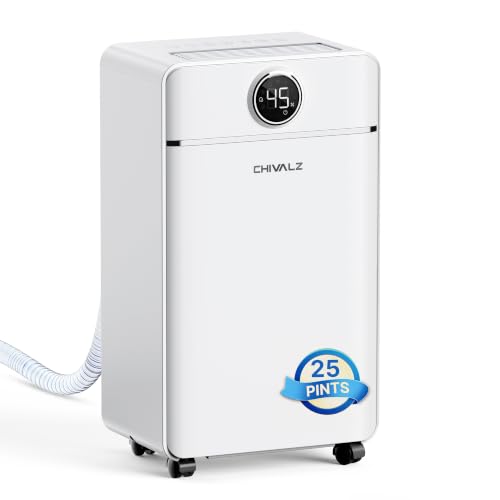
CHIVALZ 25 Pints Dehumidifier 1800 Sq.Ft

VinburgAir 98 OZ Dehumidifier (Light Black)

DuraComfort 35 Pints Dehumidifier 2500 Sq.Ft
The Picks, Examined More Closely
Most compact picks below are sized for a single bathroom, but the Waykar 145 Pints Dehumidifier is the one to reach for when the damp problem spans an entire basement, a large garage, or a workshop. The built-in condensate pump pushes water upward and out through the included drain hose, so you can route moisture to a sink, a floor drain, or even a window without babysitting a tank. Daily moisture removal tops out at 145 pints under saturated conditions, and the listed coverage stretches to 6,500 square feet.
For most households, this is overkill for a typical half bath, but that scale is the point. In a home where musty air keeps creeping upstairs from a below-grade level, a heavy-duty unit like this handles the root cause instead of just drying the visible room.
Features That Help
- Built-in pump lets you drain upward and out, so placement stays flexible in basements without floor drains.
- Adjustable humidity range from 30% to 80% lets you dial in a comfort level rather than running flat-out.
- High daily extraction means one machine can cover a multi-room space without daisy-chaining smaller units.
Things To Consider
- Size and weight make it awkward to reposition frequently, so plan a semi-permanent spot before plugging in.
- Filter cleaning is a recurring task; depending on dust levels, expect to rinse the mesh every few weeks.
Quick Facts
Who It Suits Best
Homeowners fighting chronic basement dampness or anyone drying out a large garage, workshop, or storage space.
Where Another Pick Suits Better
The Waykar 34 Pints Energy Star Dehumidifier is a smarter fit for apartment dwellers who only need living-area moisture control.
The PSOS 98 OZ Dehumidifier sits in that sweet spot between a passive DampRid tub and a full-size compressor unit. It uses dual semiconductor condensation, the same thermoelectric technology (a solid-state module that cools air to condense moisture without a moving compressor) you find in many small desktop dehumidifiers, so it runs quietly enough to leave on a bathroom counter overnight. The 98-ounce tank holds a day or two of output in a typical half bath, and the 7-color ambient light is a small touch that doubles as a nightlight.
Renters who can’t drill into tile or run a drain hose get a no-installation setup here: drop it on a flat surface, plug it in, and let it cycle. In our view, that simplicity is the headline feature, not the noise spec.
What It Does Well
- Thermoelectric operation keeps noise low, which matters in a bathroom next to a bedroom wall.
- Auto shut-off protects the unit when the tank fills, so you don’t return to an overflow.
- Compact body fits on a countertop or narrow shelf without crowding the sink.
- Humidity display gives a real reading rather than a vague indicator light.
Worth Noting
- Thermoelectric units pull moisture more slowly than compressor models, so very soggy spaces take patience.
- Emptying the tank is manual; a gravity drain option is not included.
Made For
Small-space dwellers, renters, and anyone wanting a quiet plug-and-play unit for a half bath or guest bathroom.
Skip It When
The QFOX Rotary Dehumidifier is a stronger choice for a chilly three-season porch or unheated basement where compressor output drops.
The FreAire 34 Pint Dehumidifier is a sensible middle child in this list. It pulls up to 34 pints per day under saturated conditions and lists coverage of 2,500 square feet, which fits most mid-size bedrooms, finished basements, and open-plan living areas. The included 6.56-foot drain hose lets you set up continuous drainage, useful if you plan to leave the unit running for weeks at a time during a humid summer.
Compared to the Waykar 145 Pints above, this one trades raw capacity for a smaller footprint and lower operating cost. For a single-zone problem, that trade is usually the right one.
Notable Upsides
- Continuous drain option means no tank emptying in steady humidity.
- Daily extraction handles a damp bedroom or a small basement without cycling endlessly.
- Listed coverage gives a clear target room size for realistic planning.
Trade Offs
- Compressor units like this one produce more heat and noise than the thermoelectric PSOS, so placement away from a bed matters.
- Coil maintenance is a recurring ownership task in dusty environments.
Feature Snapshot
Best Suited To
Anyone drying out a mid-size bedroom, a finished basement, or a converted bonus room that struggles with summer humidity.
Not Your Match When
The Waykar 150 Pint Dehumidifier with Pump handles a full large basement where this unit’s 34-pint ceiling would run nonstop.
Every other pick on this list needs an outlet, but the DampRid Drop-In Tablet Refill uses no electricity at all. The tablets are designed to drop into the reusable DampRid starter tub, where a 360-degree vented top pulls air across the absorbing material and traps moisture inside. The fragrance-free formula avoids the perfumed smell of standard DampRid, which is a small but real win in a bathroom.
For a boat cabin, a closet, or any space with no power, this is the right tool. The catch is that the absorbing capacity is modest, so a true 6,000-square-foot basement is not its job.
Where It Delivers
- Zero power draw means placement anywhere, including unpowered cabins and RVs in storage.
- Fragrance-free formula keeps bathrooms from smelling like a cleaning product.
- Refill tablets are cheaper than buying a fresh tub each cycle.
Honest Caveats
- Absorption is slow compared to compressor units, so expectations need a reality check for very damp rooms.
- You’ll see liquid collect in the bottom of the tub over time, which needs emptying every few weeks.
Whose Shelf It Belongs On
People without a handy outlet, anyone storing an RV or boat through a humid winter, and renters who can’t run a cord to the bathroom.
Look Elsewhere When
The PSOS 98 OZ Dehumidifier is the right call when you want continuous, faster moisture removal in a powered bathroom.
The QFOX Rotary Dehumidifier uses a desiccant rotary wheel, a moisture-absorbing disc that turns through a stream of air, instead of the cold coil most compressor units rely on. That difference matters in cool rooms, because compressor output drops fast once the air dips below 65°F, while a desiccant unit keeps pulling moisture at lower temperatures. Cold basements, unheated mudrooms, and RVs stored over a chilly shoulder season are where this design pays off.
It’s also notably quiet, with a listed sleep mode that helps if you’re running it in a converted sleeping space. The 2.5L tank and included drain hose give you both options.
The Upside
- Desiccant technology keeps working in cooler air where standard compressors lose steam.
- Sleep mode is genuinely quiet enough for a nearby bedroom.
- Auto shut-off protects the unit when the tank fills.
- Ambient light doubles as a soft night feature in a dark bathroom.
Points To Note
- Desiccant rotors consume more power per pint of moisture than efficient compressors, which is worth knowing on a long electric bill.
The Right Fit
Homeowners with a chilly three-season room, an RV, or an unheated basement that compressor units struggle to handle.
Swap It Out When
The Waykar 34 Pints Energy Star Dehumidifier is the more efficient pick for a heated, room-temperature space.
The Waykar 34 Pints Energy Star Dehumidifier is a more compact cousin to the larger Waykars earlier in this list, sized for spaces up to 2,000 square feet. The 0.62-gallon tank is small for a compressor unit, but the included drainage option means you can ignore the tank entirely with a hose run. Energy Star rating is the headline: a unit that runs daily without spiking the electric bill is genuinely useful in a heated living space.
Apartment dwellers with humidity in a single zone get a sensible match here, and the smaller cabinet is easier to tuck into a corner than the 145-pint model above.
Noteworthy Benefits
- Energy Star rating keeps long-term operating cost lower than non-rated units.
- Compact body slides into a corner or closet without rearranging furniture.
- Auto or manual drainage flexibility suits both permanent and temporary setups.
Small Caveats
- Smaller tank means manual emptying if you skip the drain hose.
At A Glance
Perfect Match For
Energy-conscious apartment dwellers running a dehumidifier daily in a single living zone or bedroom.
Reach For A Different Pick When
The DuraComfort 35 Pints Dehumidifier offers a similar ceiling with a smart humidistat for set-and-forget control.
The Waykar 150 Pint Dehumidifier pushes extraction to the top of this list at 150 pints per day, with a 7,000-square-foot coverage ceiling for whole-basement or open commercial layouts. The built-in pump ships ready to push water upward and out through the included drain hose, which removes the only real chore of owning a large-capacity unit. Auto defrost keeps the coil from icing up in cooler basement corners.
Smart auto comfort mode is a useful touch for households that want the unit to manage itself rather than chase a specific number on a humidistat.
Strong Points
- Top-of-list extraction handles the worst basement saturation without running around the clock.
- Built-in pump plus drain hose enables fully hands-off operation in most installations.
- Auto defrost prevents coil icing in cooler spaces, which extends run time.
Less Ideal Details
- Size and noise level make it a poor fit for living areas; basements and utility rooms are the natural home.
Who Should Grab It
Owners of large basements, multi-room workshops, or small commercial spaces that need serious daily moisture removal.
Another Choice May Suit
The FreAire 34 Pint Dehumidifier is a much better match for a single bedroom or a small finished basement where 150 pints is overkill.
The CHIVALZ 25 Pints Dehumidifier brings a useful three-mode layout to a compact compressor unit: standard dehumidification, laundry mode for drying clothes indoors, and a sleep mode that drops fan noise. Coverage tops out around 1,800 square feet, and the included drain hose lets you run continuous drainage once you’ve found a permanent spot. The LED humidity display shows real-time readings, so you’re not guessing.
For a household that also uses a dehumidifier to speed-dry laundry in winter, the laundry mode here is a real advantage over a single-purpose unit.
Practical Pluses
- Laundry mode pulls extra moisture out of hanging clothes, cutting indoor dry time noticeably.
- LED display gives a quick humidity readout without app dependencies.
- Auto mode holds a comfort range without constant tweaking.
A Few Limitations
- 25-pint ceiling makes it undersized for very large basements with standing damp.
Key Specs
Who Will Love This
People drying laundry indoors and anyone wanting a set-and-forget auto mode in a small finished basement.
A Better Fit Elsewhere
The FreAire 34 Pint Dehumidifier is the right call when 25 pints is not enough daily extraction for a damper space.
The VinburgAir 98 OZ Dehumidifier is a thermoelectric compact unit aimed at bedrooms, nurseries, and small bathrooms. The hidden aroma slot accepts essential oil pads, which is a small but pleasant feature for a unit sitting on a nightstand. Sleep mode drops fan noise below 30 dB, quiet enough to live next to a bed without complaint. The 98-ounce tank keeps the size similar to the PSOS above, and a drain hose is included for continuous setups.
Three timer modes give you more scheduling control than most compact units, useful for cycling the unit on and off overnight.
Strengths Worth Knowing
- Sleep mode below 30 dB lets you run it next to a sleeping child or light sleeper.
- Aroma pad slot adds a scent option without a separate diffuser.
- Three timer modes offer more scheduling than typical compact units.
Worth Bearing In Mind
- Like other thermoelectric units, extraction is slower than compressor models, so very damp rooms need patience.
Built With In Mind
Bedroom and nursery use, especially in small apartments where a full-size compressor is too loud or too big.
Where A Sibling Pick Shines
The PSOS 98 OZ Dehumidifier is the closer match when you want a humidity display and ambient light without the aroma feature.
The DuraComfort 35 Pints Dehumidifier rounds out this list as a straightforward, set-and-forget compressor unit for everyday household use. Coverage extends to 2,500 square feet with up to 35 pints of daily extraction, and a smart humidistat reads the room and cycles the compressor to hold your target humidity. The included drain hose covers continuous setups, and a built-in timer helps cycle the unit through a daily routine.
For a household that wants one dehumidifier to handle a bedroom, a finished basement, and a shared living area without special features, this is a practical daily driver.
The Helpful Details
- Smart humidistat adjusts output to maintain a target humidity without constant babysitting.
- Energy Star rating keeps running cost reasonable for daily use.
- Built-in timer and included drain hose support both scheduled and continuous operation.
Some Limits To Know
- Compressor noise makes a quiet bedroom placement more about distance than unit design.
Right Fit For
Households that want one reliable compressor unit for a mid-size room, a small basement, or a shared living area.
Consider Something Else When
The VinburgAir 98 OZ Dehumidifier is a quieter fit for nurseries and bedrooms where compressor noise is a deal-breaker.
What To Weigh Before Choosing A Bathroom Dehumidifier
Bathroom humidity behaves differently from basement damp, so the right tool depends on how much water is in the air and how often you run the unit. Smaller thermoelectric models like the PSOS and VinburgAir handle the daily steam from showers without dominating counter space, while compressor units like the FreAire, CHIVALZ, and DuraComfort make more sense in larger rooms or rooms that stay damp between showers. Cool spaces, including unheated basements and three-season rooms, are where a desiccant rotary like the QFOX earns its keep, because compressor output drops fast below 65°F.
Drainage matters more than people expect. A built-in pump or included drain hose turns a daily chore into a one-time setup, especially for a unit that runs around the clock in summer. For renters or anyone avoiding permanent plumbing changes, a passive DampRid tablet setup covers a closet or a small bathroom with zero installation. Continuous run time, filter cleaning, and tank emptying are all worth weighing before picking a size, since the right capacity for your room determines how often you’ll be interacting with the unit.
Key Considerations Across These Picks
Where Shoppers Go Wrong
The most common mistake is sizing by square footage alone, without considering how damp the room actually gets. A half bath used twice a day has very different needs from a basement that stays above 70% humidity year-round, and a small thermoelectric unit in the second space will simply keep running without solving the problem. Another trap is ignoring noise placement: putting a compressor unit directly behind a bedroom wall guarantees complaints, no matter how efficient the spec sheet looks. Always check the listed coverage ceiling against real room size, and read the noise profile carefully before placing a unit near a sleeping area.
When Paying More Pays Off
Higher-tier units earn their cost in three places: extraction speed, smart controls, and pump-equipped drainage. A 145- or 150-pint model with a built-in pump, like the Waykars at the top of this list, replaces a daily tank-empty routine with a permanent drain line, which compounds in saved time across every humid month. Smart humidistats and Energy Star ratings are not flashy, but they cut long-term electric cost on a unit that may run 8 to 12 hours a day through summer. The honest read is that the upgrade only pays off when you actually use the room hard; in a guest bathroom that runs twice a week, the simpler picks earlier in this list are the right answer.
Frequently Asked Questions
How many pints do I need for a small bathroom?
For a half bath used by one or two people daily, a unit in the 25 to 35 pint range is generally enough to keep up with shower steam. A thermoelectric compact model handles a powder room or a small en-suite, while a mid-size compressor unit makes more sense if the bathroom is part of a larger humid zone.
Are thermoelectric dehumidifiers good enough for bathrooms?
Thermoelectric models, the type that use a solid-state cooling module rather than a compressor, work well in small, enclosed bathrooms where the goal is steady moisture control rather than heavy extraction. They run quietly and stay cool to the touch, but they pull less water per day than compressor units, so very damp rooms outpace them.
Can I leave a bathroom dehumidifier running all day?
Most modern units are designed for extended run time and include auto shut-off when the tank fills, plus a drain option for continuous use. Running one all day in a frequently used bathroom is normal, though compressor models generate some heat, so placement near a thermostat is worth considering.
Where should I place a dehumidifier in a bathroom?
Keep the unit a few inches off the tile, away from the direct shower spray, and on a flat surface. For maximum effect, position it where air circulates freely rather than tucked into a sealed cabinet, and route any drain hose downhill toward a sink or floor drain.
How often do I need to clean a bathroom dehumidifier?
Wipe down the exterior monthly, and rinse or vacuum the air filter every two to four weeks depending on dust. Compressor coils benefit from a seasonal deep clean in busier homes, while thermoelectric units need less mechanical maintenance but still need the tank emptied regularly.
Final Verdict
Compact dehumidifiers for bathroom use come in three broad flavors: quiet thermoelectric units for small enclosed rooms, mid-size compressor units for larger humid zones, and desiccant or pump-equipped heavy-duty picks for cool basements and whole-house damp. Match the unit to the room size, the temperature, and how much you want to think about drainage, and the rest of the choice gets easier. Pick the one that fits your space, and your towels, mirrors, and grout will thank you.