


Humidity sneaks into basements, bathrooms, closets, and converted offices. The right machine pulls that moisture out before mold spores settle into drywall, wood trim, or stored fabric. Compact dehumidifiers come in a few distinct flavors: small-room workhorses for bedrooms and apartments, mid-size units that can sit in a finished basement, specialty closet and cabinet designs, and large-capacity pumps built for crawl spaces and warehouses. The lineup below covers all four styles so you can match a machine to the actual square footage and air conditions you live with.
The Essentials At A Glance

Waykar 145 Pints High Efficiency Dehumidifier with Pump

Rayspace Reusable Physical Cabinet Dehumidifier with PTC Heating
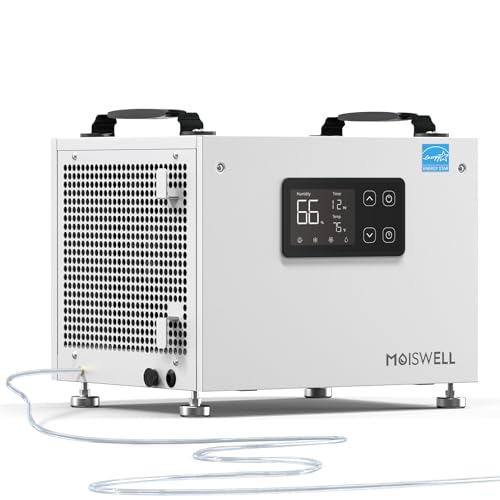
Moiswell 70 Pints Commercial Dehumidifier with Pump
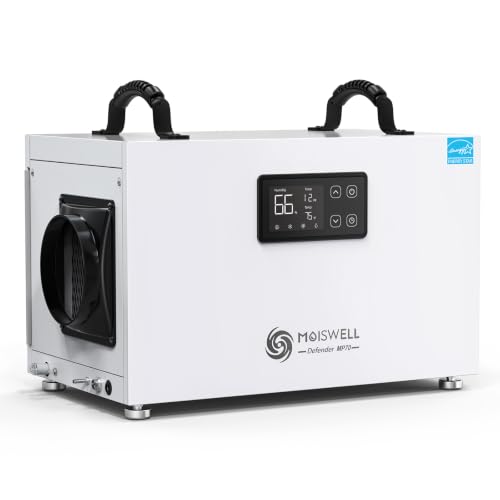
Moiswell 145 Pints Commercial Dehumidifier with Pump

Kesnos 120 Pint Energy Star Dehumidifier for Basement
Kesnos 80 Pints Energy Star Dehumidifier for Home
Kesnos 30 Pints Energy Star Dehumidifier, Ultra-Quiet 36 dB

MOUNTO 268 Pints LGR Commercial Dehumidifier with Pump

Waykar 34 Pints Energy Star Dehumidifier for Home and Basement

Waykar 150 Pint Energy Star Dehumidifier with Pump
Taking A Closer Look At The Options
Open-floor basements and finished rec rooms need pulling serious moisture without you babysitting a tank. The Waykar 145 Pints High Efficiency Dehumidifier with Pump is built for those wide, damp spaces. Its daily removal rate handles a sump-room environment that would stall most mid-size machines, and the integrated pump means you can route condensate out a window, into a floor drain, or up to a sink without manual emptying.
Compared to the smaller Waykar you’ll see later in this list, this one trades portability for raw output. Owners running it in 4,000+ square foot basements commonly report the pump pushing water uphill without issue, which removes a real chore from weekly maintenance. For households where humidity is structural rather than seasonal, this is the workhorse end of the lineup.
The Good Stuff
- Built-in condensate pump removes the need to manually drain a tank, a real win in unattended basements
- Daily extraction capacity suited to open floor plans, storage rooms, and below-grade workspaces
- Adjustable humidity range from 30% to 80% lets you tune for a finished living area versus a damp storage zone
- Drain hose and tank included, so you can choose permanent drainage or portable use
Trade Offs
- At this capacity class, the unit is large and heavy, so plan a permanent spot rather than daily relocation
- Fan noise is noticeable on high speed, which matters in finished living areas that double as media rooms
- For apartments under 1,000 square feet, the output is more machine than the room needs
Built With In Mind
Homeowners with a finished basement over 3,000 square feet, a converted shop, or a below-grade storage area where a hose run to a drain is realistic.
Look Elsewhere When
The Waykar 34 Pints Energy Star Dehumidifier for Home and Basement suits a small apartment or single bedroom far better, where this larger unit would be overkill.
Walk-in closets, wardrobes, and under-stair storage don’t need a 70-pint workhorse. They need something small, quiet, and ideally chemical-free. The Rayspace Reusable Physical Cabinet Dehumidifier with PTC Heating is purpose-built for those tight, enclosed spaces where a regular compressor unit would be absurdly oversized.
The 360° absorption design pulls moisture from all sides, and the PTC heating element (a type of self-regulating ceramic heater that warms air without getting dangerously hot) helps dry out damp shoes, gloves, or stored leather. It runs without liquids or disposable cartridges, so you just plug it in and let it cycle. Against the larger Waykar at the top of this list, this Rayspace is a different animal entirely: not a whole-room machine, but a quiet guardian for your wardrobe.
What Pays Off
- PTC heating assists in drying damp items without venting steam or chemicals into the cabinet
- Physical absorption media means no refills, replacements, or drip trays to empty
- Compact cabinet form factor fits on a shelf, in a wardrobe corner, or on a closet floor
- Reusable design cuts recurring costs associated with disposable desiccant bags
Honest Caveats
- Effective only in small, enclosed spaces, so it cannot replace a room-sized dehumidifier
- Warming cycle adds a small amount of heat, which may be unwelcome in a sealed summer closet
- Absorption media will eventually need regeneration, a routine maintenance step to plan for
Quick Facts
Whose Shelf It Belongs On
Anyone storing wool, leather, or documents in a closet, wardrobe, or small cabinet where regular room dehumidifiers cannot reach.
A Better Fit Elsewhere
The Kesnos 30 Pints Energy Star Dehumidifier handles an actual bedroom or office, while the Rayspace is strictly for sealed storage spaces.
Not every basement needs 145 pints. The Moiswell 70 Pints Commercial Dehumidifier with Pump lands in a middle ground that’s well-suited to a moderate 1,000-square-foot basement or a small workshop that occasionally sweats in summer. It pulls up to 70 pints at saturation and 35 pints under the more realistic AHAM test conditions (a standard room environment of 80°F and 60% relative humidity used to compare machines fairly), which is a useful way to read advertised ratings.
Where it earns its keep is the pump and efficiency rating combined. You get a real drain-out option without a separate accessory purchase, and the unit qualifies for the Energy Star standard, meaning it meets strict U.S. energy-efficiency guidelines. For households between the Rayspace closet unit and the Waykar 145-pint beast, this Moiswell hits a useful size and price tier.
Strong Points
- Built-in pump lets you route water to a drain without lifting or emptying a tank
- Energy Star qualification keeps running costs in check compared to non-rated commercial units
- 70-pint capacity is the right size for many finished basements without overpaying for headroom
- Auto-restart after power loss preserves your settings, a small but real convenience
Points To Keep In Mind
- Not a match for a true 2,500+ square foot basement where a higher-capacity unit would cycle less
- At full speed, fan noise is similar to other compressor units in this class, so consider placement in a finished room
Right Fit For
Mid-size basements around 1,000 square feet where you want a pump but don’t need industrial output.
Skip It When
You need to cover a larger area, in which case the Moiswell 145 Pints Commercial Dehumidifier steps up the airflow and coverage significantly.
Workshops, crawl spaces, and warehouses demand serious airflow. The Moiswell 145 Pints Commercial Dehumidifier with Pump moves air at 206 CFM (cubic feet per minute, a measure of how much air the unit circulates each minute), and that matters when you have a long, low crawlspace where still air traps moisture in corners. Higher CFM means the machine reaches farther into a space and recovers faster after a door is opened.
Against the smaller 70-pint Moiswell earlier in this list, the difference is coverage and headroom. Owners running this in larger workshops commonly describe it as a “set it and forget it” machine, since the pump handles drainage continuously. The trade-off is footprint and noise. This is a commercial-grade box, not something you’d tuck into a hallway.
A Favorable Mix
- 206 CFM airflow reaches deep into crawl spaces and open commercial areas
- 145-pint daily capacity matches larger basements and light-industrial use
- Built-in pump removes the manual-empty chore during continuous operation
- Robust housing suited to a garage, basement corner, or job-site environment
Room For Improvement
- Footprint and weight are meaningful, so pick a permanent spot before setup
- Operating noise is industrial in character, which can disturb adjacent living areas
- Drain hose routing requires planning if no floor drain is nearby
Technical Highlights
Best Suited To
Workshops, crawl spaces, and light-commercial spaces up to around 6,000 square feet where air circulation matters as much as extraction.
Where Another Pick Suits Better
For residential basements, the Kesnos 120 Pint Energy Star Dehumidifier for Basement offers a more home-friendly footprint at a similar removal tier.
Most homeowners don’t need crawlspace-grade airflow. They need a quiet, dependable basement box that can run for months without intervention. The Kesnos 120 Pint Energy Star Dehumidifier for Basement sits in that exact slot, rated for spaces up to 6,500 square feet, with the included drain hose letting you set up permanent drainage and walk away.
Compared to the Waykar 145 you saw earlier, this Kesnos trims a small amount of peak output but adds home-friendly features. The adjustable humidity range (30% to 80%) means you can dial in comfort levels for a finished rec room rather than a damp concrete corner. For families who want one machine to handle a full basement, this is one of the more straightforward setups in the category.
Standout Benefits
- Energy Star rating translates to measurable savings on monthly electric bills
- Included drain hose supports permanent installation without extra accessories
- 30% to 80% adjustable humidity range suits finished living spaces and storage alike
- 120-pint capacity is genuinely useful in damp basements over 2,000 square feet
Small Caveats
- Without a built-in pump, the drain hose relies on gravity, so the unit should sit slightly above the drain
- Larger physical size means you should measure your intended spot before ordering
At A Glance
Who Will Love This
Homeowners with a finished basement between 2,000 and 5,000 square feet who want to install a drain hose once and not think about it again.
Not Your Match When
A small apartment dweller would be better served by the Waykar 34 Pints Energy Star Dehumidifier, which is sized for living rooms and offices.
The sweet spot for most finished basements sits around 80 pints. The Kesnos 80 Pints Energy Star Dehumidifier for Home covers up to 5,500 square feet, and the front humidity display means you can read the room’s current reading at a glance, no bending, no guessing. The control scheme uses 5% increments in either direction, which is more granular than many units in this price band.
You also get a low-fan option for nighttime or living-area use, and a high-fan mode for aggressive drying after a leak. It’s not a pump model, so drainage is gravity-fed through a hose, but the design works well for basements where you can route to a floor drain. Compared to the larger 120-pint Kesnos above, the trade is size and capacity for a more home-friendly footprint.
Positive Points
- Front-mounted humidity display is easy to read across a room
- Two fan speeds let you balance noise and drying power throughout the day
- 5% humidity adjustment steps feel more precise than typical 10% increments
- Energy Star rating keeps operating cost reasonable in long-running basements
Possible Compromises
- Gravity-drain design requires the unit to sit above the drain point, limiting placement
- At 80 pints, it can run continuously in a very damp basement, so the tank fills fast without a hose
Who Should Grab It
Homeowners with a finished basement under 4,000 square feet who value a readable display and flexible fan settings.
Consider Something Else When
If you need set-and-forget drainage without raising the unit, the Moiswell 70 Pints Commercial Dehumidifier with Pump offers a built-in pump at a similar tier.
Bedrooms, nurseries, and home offices have one rule above all: keep it quiet. The Kesnos 30 Pints Energy Star Dehumidifier, Ultra-Quiet 36 dB runs at 36 decibels, which is roughly the level of a quiet library. At that noise floor, you can run it through a conference call or a night’s sleep without it pulling focus.
The 2,500-square-foot coverage handles most bedrooms, apartments, and small finished basements. The unit can drive humidity down to 30% RH (relative humidity, the percentage of moisture the air currently holds compared to what it could hold at that temperature), which is drier than many competitors that floor at 40%. For a converted guest room or a finished bonus space, that extra range matters if you’re sensitive to humidity swings.
A Strong Showing
- 36 dB operation is one of the quieter units in this capacity class
- 30% RH floor is more aggressive than typical 40% minimums, helping in very damp rooms
- Compact footprint fits a bedroom corner or under a desk in a home office
- Energy Star certification keeps electrical use modest for an always-on appliance
Things To Weigh
- 30-pint capacity is undersized for a true basement, so this is a room machine, not a whole-home one
- You’ll need to empty the tank or attach a hose regularly in a chronically damp room
Perfect Match For
Anyone running a dehumidifier in a bedroom, nursery, or home office where fan noise would otherwise be a deal-breaker.
Swap It Out When
You need to cover an open basement, where the Kesnos 80 Pints Energy Star Dehumidifier for Home provides the larger capacity this unit lacks.
Flood response, water-damage restoration, and serious job-site drying push a different category entirely. The MOUNTO 268 Pints LGR Commercial Dehumidifier with Pump is the kind of machine a restoration contractor wheels into a wet building. It’s labeled LGR (low-grain refrigerant), a commercial-grade cooling design that pulls moisture out of air even at very low humidity levels, which is essential when you need to dry a structure aggressively.
For homeowners, this is more machine than most homes need. Where it earns its place is post-flood drying, basement water events, or serious humidity problems that smaller units can’t touch. The integrated pump with a 15-foot lift head means you can route water up and out to a sink or window, and the rolling chassis makes repositioning less of a chore.
Noteworthy Benefits
- LGR technology extracts moisture even at low humidity, ideal for structural drying
- 268-pint daily capacity handles serious water events and large commercial spaces
- Built-in pump with 15-foot lift gives flexible drain routing on job sites
- Rolling design makes it manageable to reposition despite the commercial size
Practical Considerations
- Capacity and size are excessive for routine residential humidity control
- Operating cost and noise are at the high end of the category
- Power draw may require a dedicated circuit on a standard 15-amp household line
Made For
Restoration contractors, property managers, and homeowners dealing with serious water intrusion or chronic commercial-grade moisture.
Reach For A Different Pick When
For everyday basement humidity, the Waykar 145 Pints High Efficiency Dehumidifier with Pump covers a typical home without the industrial footprint.
Smaller spaces ask for a smaller machine. The Waykar 34 Pints Energy Star Dehumidifier for Home and Basement trims the cabinet and the weight, but keeps a rotary compressor (a quieter, more efficient compressor type than older piston designs) doing the heavy lifting. The result is a unit that fits a living room, bedroom, or small office without dominating the space.
You can run it in two drainage modes. The 0.62-gallon tank handles moderate days, and the continuous drain option lets you route a hose to a sink or bucket for longer runs. For renters and apartment dwellers, that flexibility matters because permanent installation is rarely an option. Against the larger Waykar at the top of this list, this is the everyday version.
Where It Delivers
- Compact cabinet fits apartments, small basements, and home offices
- Rotary compressor design runs more quietly than older piston-style units in this size class
- Auto or manual drainage modes suit both renters and homeowners
- 30% to 80% humidity range matches the rest of the Waykar line
Less-Strong Areas
- 0.62-gallon tank fills quickly in a chronically damp basement, so the continuous drain matters
- 34-pint capacity is too small for a true basement over 2,000 square feet
Key Specs
Who It Suits Best
Apartment dwellers, condo owners, and small-home households who need reliable moisture control without an industrial cabinet.
Where A Sibling Pick Shines
For a noisy basement job, the Moiswell 70 Pints Commercial Dehumidifier with Pump offers substantially more capacity at a similar footprint.
When a basement runs 6,000 to 7,000 square feet and pulls in humidity from every wall, you need headroom. The Waykar 150 Pint Energy Star Dehumidifier with Pump covers up to 7,000 square feet and adds the two features every chronic-humidity household appreciates: a built-in pump and an auto-defrost cycle that keeps the coils from icing up in cooler conditions.
The Smart Auto Comfort Mode reads the room’s humidity and adjusts fan speed and operation on its own, which is a real benefit in a space that swings between damp summer air and dry winter air. Compare it to the Waykar 145 earlier in the list, and the differences are incremental but meaningful: more coverage, smarter control, and a slightly more refined user experience.
Features That Help
- Auto-defrost keeps the coils functional in cool basement temperatures, which extends runtime
- Smart Auto Comfort Mode adjusts output without manual intervention through seasonal swings
- Built-in pump supports permanent drainage in a space you rarely enter
- 150-pint daily removal handles very wide basements and light-commercial rooms
Worth Bearing In Mind
- Physical size is substantial, so the spot you choose should be permanent
- Premium features carry a higher price tier than simpler 70- to 80-pint units
Best Suited To
Homeowners with very large or unusually damp basements who want the machine to manage itself across seasonal changes.
Look Elsewhere When
The Kesnos 80 Pints Energy Star Dehumidifier for Home is the more measured choice for a typical finished basement under 4,000 square feet.
What Matters Most Before Choosing Compact Dehumidifiers
Match Capacity To Square Footage
Pint ratings feel abstract until you connect them to a room. A 30-pint unit handles 1,500 to 2,500 square feet under normal conditions, while a 70-pint machine manages 1,000 to 1,500 square feet at the more demanding AHAM standard. Larger basements over 3,000 square feet typically need 100+ pints to keep up with daily moisture migration through concrete walls and HVAC returns.
Decide On Drainage Before You Buy
Gravity-drain units need a hose and a drain that’s lower than the unit. Pump models cost more but can push water uphill or across a longer horizontal run, which matters in basements where the nearest drain is around a corner. For chronic humidity, a pump is almost always worth the upcharge, since manual tank emptying becomes tedious within weeks.
Weigh Noise Against Living Space
A 36 dB bedroom unit disappears into background sound. A commercial 145-pint compressor at 55 to 60 dB belongs in a basement corner, not a finished rec room. The Kesnos 30-pint quiet model and the larger Waykar units represent two very different noise profiles for two very different use cases.
Look For Energy Star On Anything That Runs Daily
A dehumidifier in a damp basement runs for months. Energy Star-rated units use meaningfully less power over that span, which compounds into real annual savings. The Kesnos and Waykar lines in this list all carry that certification, and the Moiswell 70-pint model qualifies as well.
Key Considerations Across These Picks
Common Shopping Slip Ups
The most frequent mistake is sizing a unit by peak pints rather than by AHAM ratings, which use a standardized 80°F, 60% relative humidity environment that better reflects real homes. A 70-pint saturation rating can drop to 35 pints at AHAM, which is the more honest number for everyday use.
Another common error is ignoring the tank size versus your actual room humidity. A 0.62-gallon tank in a damp basement can fill in hours, turning the unit into a twice-daily chore. A continuous drain hose or a built-in pump solves this entirely, so plan drainage before delivery.
What The Higher Tier Buys
Stepping up to a 120- or 150-pint model usually gets you a built-in pump, a defrost cycle, and a more durable compressor rated for continuous duty. The Waykar 150 and the Kesnos 120 also include smarter controls that adjust output based on real-time humidity, which reduces cycling wear and electrical cost.
The upgrade is worth it for chronic dampness, large basements, and any installation where you can’t easily visit the unit. For a guest bedroom that gets damp only in July, the savings of a smaller machine outweigh the convenience of a premium one.
Frequently Asked Questions
How Many Pints Do I Need For A 1,500 Square Foot Basement?
A 50- to 70-pint unit at AHAM conditions handles that footprint comfortably, with some headroom for especially damp walls. The Moiswell 70 Pints Commercial Dehumidifier with Pump fits that profile well.
Can A Dehumidifier Run Continuously?
Yes, most modern compressor units are rated for continuous operation. Models like the Waykar 150 Pint Energy Star Dehumidifier include auto-defrost to prevent coil icing during long, cool runs.
Do I Need A Pump Or Just A Drain Hose?
A drain hose relies on gravity, so the unit must sit above the drain point. A pump, found on the Waykar 145 Pints and MOUNTO 268 Pints models, pushes water upward or across long runs, which is more flexible.
Are Closet-Size Dehumidifiers Effective?
For sealed wardrobes and small cabinets, a physical-absorption unit like the Rayspace Reusable Physical Cabinet Dehumidifier works well. For an open closet with airflow to the rest of the house, a small compressor unit is more practical.
How Often Does The Tank Need Emptying?
Tank frequency depends on humidity and capacity. A 0.62-gallon tank in a damp room can fill in a day; a 2+ gallon tank in a moderate basement may run a week. Continuous drainage removes the chore entirely.
The Takeaway
Moisture control comes down to matching the machine to the room, the drainage to the building, and the noise profile to your daily life. The picks above run the full range from a quiet 30-pint bedroom unit to a 268-pint commercial workhorse, so the right choice depends less on brand and more on the square footage and humidity severity in your specific space. Pick the capacity that fits, choose drainage you won’t have to babysit, and let the machine do the work.