

Humidity doesn’t care whether you run a small studio or manage a 2,500-square-foot basement. The right commercial-grade dehumidifier pulls moisture steadily from the air, protecting wood floors, equipment, and inventory from the slow damage that condensation causes. This roundup covers nine workhorse options, from compact thermoelectric units for tight apartments to industrial LGR (low-grain refrigerant) machines built for water-damage crews. Each pick is sized for a specific scenario, so you can match capacity to the space rather than overspending on output you don’t need.
The Choices Worth Comparing

PSOS 98 OZ Dehumidifier for Home (Gray)

FreAire 34Pint Dehumidifier 2500 Sq.Ft
ARGENDON Crawlspace Dehumidifier 5-Year Warranty
ARGENDON 180 Pints Crawlspace Dehumidifier, ETL

ARGENDON 145 Pint Guardian 60P Dehumidifier

ARGENDON Crawl Space Dehumidifier with Pump
ALORAIR 110 PPD Commercial Dehumidifier with Pump

ALORAIR 120 PPD Commercial Dehumidifier with Pump

ALORAIR 170 PPD LGR Commercial Dehumidifier
More On The Choices That Made The List
The PSOS 98 OZ unit takes a different path than the compressor-driven picks further down this list. It uses dual semiconductor condensation, which is a thermoelectric cooling method that pulls moisture without a noisy compressor, making it a thoughtful fit for bedrooms and small living areas where steady background noise would be a dealbreaker.
The 98-ounce tank and 1,000 sq. ft. coverage ceiling keep it honest about its scale. That’s a weekend of damp air in a studio, not a basement cure. For most people, the auto shut-off and seven-color ambient light feel like considerate touches rather than gimmicks.
What Helps Most
- Dual semiconductor tech runs quietly enough for nighttime use
- Auto shut-off protects against overflow during long overnight cycles
- Humidity display takes the guesswork out of target levels
- Lightweight body moves easily between rooms for spot treatment
Honest Caveats
- Tank needs manual emptying every day or two in genuinely damp rooms
- Thermoelectric output drops noticeably in cooler basement temperatures
Who It Suits Best
Light sleepers, small-space dwellers, and anyone wanting a bedroom-friendly unit over industrial pulling power.
Consider Something Else When
Your basement smells like standing water and you need real extraction, since the ALORAIR 120 PPD Commercial Dehumidifier with Pump handles damp concrete far more aggressively.
FreAire targets the awkward middle ground where a thermoelectric unit lacks the muscle but a 145-pint industrial feels oversized. Rated at 34 pints per day under saturated conditions and covering up to 2,500 sq. ft., it lands as a practical step up for open-plan homes and finished basements.
The included 6.56 ft drain hose is the sleeper feature here. It lets you route condensate to a floor drain, sump, or sink without babysitting a tank. For most homeowners juggling a damp bonus room, that single accessory saves more hassle than flashy controls ever will.
Where It Helps
- 34-pint capacity tackles moderately damp basements without overheating the room
- Drain hose included, so set-and-forget operation is realistic
- 2,500 sq. ft. rating handles open living areas without a second unit
Trade Offs
- Compressor noise is louder than the PSOS unit, so placement away from bedrooms matters
- Daily output is modest for true crawlspace environments or post-flood work
- Owners commonly report the built-in humidistat reads a few points off, so a separate hygrometer helps dial in settings
Quick Facts
Right Fit For
Homeowners with large finished basements or open layouts who want compressor strength without crossing into industrial capacity.
Look Elsewhere When
You’re drying out a freshly flooded space, since the ALORAIR 110 PPD Commercial Dehumidifier with Pump delivers much faster extraction in restoration scenarios.
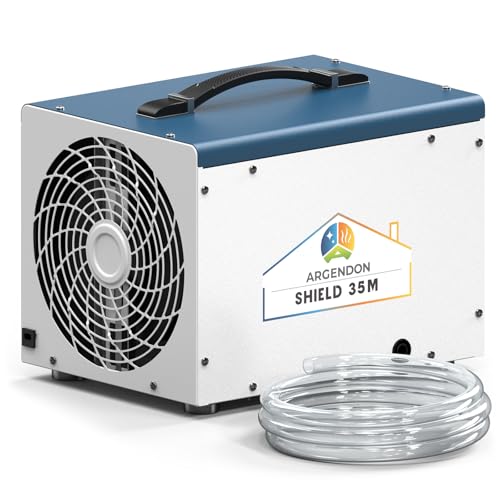
ARGENDON’s entry-level crawlspace model focuses on longevity as much as raw output. A 5-year limited warranty is uncommon in this category and signals confidence in the compressor and coil assembly. For anyone burned by a mid-cycle failure on a cheaper unit, that coverage alone can swing the decision.
The 70-pint rating covers rooms up to roughly 1,000 sq. ft., which lands it firmly in residential crawlspace and basement territory. The exterior feels industrial, with a metal housing suited to dust and the occasional bump from storage totes. The trade-off is weight; you won’t be moving this between floors often.
What Works In Its Favor
- 5-year limited warranty leads its price tier for peace of mind
- 70-pint daily extraction handles persistent basement dampness
- Sturdy housing tolerates crawlspace and garage environments
Points To Note
- Heavier than portable picks, so plan the spot before hauling it in
- Air output of 115 CFM is solid but not class-leading for fast turnover
Best Suited To
Long-term basement and crawlspace owners who value warranty coverage over compact portability.
A Better Fit Elsewhere
Contractors needing job-site portability should consider the ALORAIR 110 PPD Commercial Dehumidifier with Pump, which is lighter and built for transport between sites.
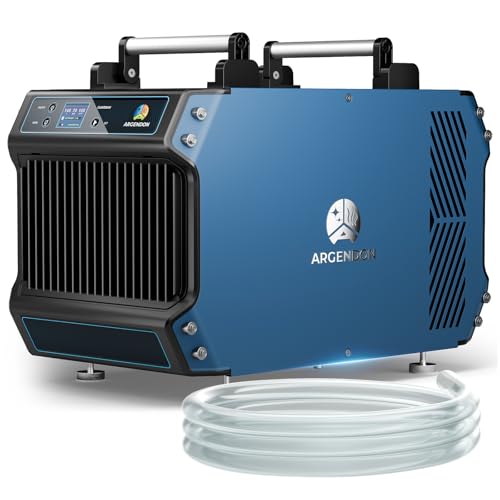
This is the unit you reach for when residential picks stop keeping up. The 180-pint daily extraction at saturation and 2,300 sq. ft. coverage put it squarely in commercial and light-industrial territory, and the ETL listing (a safety certification recognized across North American worksites) helps it pass inspection on professional job sites.
The integrated condensate pump is the headline feature. It pushes water upward through a drain line rather than relying on gravity alone, which matters when the only drain sits above the unit. Compared to the smaller ARGENDON model above, this one trades portability for raw pulling power.
Standout Benefits
- 180-pint capacity suits large basements, warehouses, and restoration projects
- Built-in pump enables overhead or long-distance drainage
- ETL certification supports commercial and contractor use
Small Caveats
- Overkill for sub-1,000 sq. ft. rooms, where a smaller unit cycles more efficiently
- Power draw is substantial, so a dedicated 15-amp circuit is wise
- Owners commonly report the unit’s weight and bulk make stairs a two-person job
Feature Snapshot
Made For
Restoration crews, property managers, and large-facility owners running serious humidity problems in big footprints.
Skip It When
You only need a damp basement cleared once, since the ARGENDON 145 Pint Guardian 60P Dehumidifier covers mid-size spaces with less operational cost.
The Guardian 60P earns its Energy Saver badge by pairing solid 145-pint daily output with what the brand describes as an energy-efficient compressor design. For anyone running a unit 24/7 in a basement or workshop, that efficiency gap shows up on the monthly bill, not just on the spec sheet.
It also comes with two drain hose options and a built-in pump, so installation flexibility isn’t an afterthought. Coverage tops out around 1,800 sq. ft., which slots it between the smaller 70-pint model and the heavy-duty 180-pint sibling.
The Upside
- Energy-efficient operation helps control long-term running costs
- 145-pint extraction handles mid-size basements and workshops comfortably
- Built-in pump plus dual drain hose options simplify setup
Less Ideal Details
- AHAM-rated output (a standardized test that real-world humidity often exceeds) drops to 60 PPD, so the headline 145-pint figure is the saturation ceiling rather than the daily norm
- Filter access requires partial disassembly for routine cleaning
Perfect Match For
Mid-size commercial property owners and homeowners running a unit continuously in larger basements or workshops.
Not Your Match When
Your priority is industrial airflow, since the ALORAIR 170 PPD LGR Commercial Dehumidifier pushes 200 CFM for much faster turnover in big spaces.
This mid-tier ARGENDON earns the Dependable Option badge for being unflashy and well-balanced. It removes 70 pints per day at saturation and 35 pints under AHAM conditions, which is enough for a typical 1,000 sq. ft. basement without pushing into the louder, heavier commercial class.
The pump and included drain hose are the practical stars. In a basement with a utility sink or sump nearby, you can set this up and stop thinking about it. The housing is compact enough to tuck along a foundation wall without dominating the space.
What Pays Off
- Pump-equipped design removes the daily tank-emptying chore
- 35-pint AHAM output suits typical mid-size basements
- Energy-conscious compressor trims running costs over time
A Few Limitations
- Saturation rating is similar to the warranty-backed 70-pint model above, but without the extended coverage
- No remote or app control, which some users now expect
Whose Shelf It Belongs On
Practical homeowners wanting pump convenience and steady performance in a moderately damp basement.
Reach For A Different Pick When
You have a documented 5-year warranty requirement, since the ARGENDON Crawlspace Dehumidifier 5-Year Warranty delivers the same output class with longer protection.
ALORAIR built the Sentinel Elite 50X for restoration crews, and the design choices reflect that. The 110-pint saturation rating, 132 CFM airflow, and rugged housing suit water-damage jobs where the unit gets hauled between sites, dropped off trucks, and run for days straight. For most homeowners it would be over-spec, but for pros, the balance is right.
The built-in pump supports overhead drainage, which matters when a job site lacks a floor drain. GPP (grains per pound) technology, a refrigerant coil enhancement that pulls moisture at lower humidity levels, helps the unit keep extracting as conditions approach the target range rather than stalling early.
Bright Spots
- 132 CFM airflow moves large volumes of air for fast drying
- GPP technology maintains extraction at lower humidity levels
- Built-in pump simplifies drainage on job sites without floor drains
- Rugged housing holds up to repeated transport
Practical Considerations
- Restoration pricing puts it beyond a casual home-shopper budget
- Air filter needs regular cleaning under heavy dust conditions
- Weight and handle design are built for crews, not solo movers
Feature Card
Who Will Love This
Restoration contractors, mitigation companies, and serious DIYers tackling flood recovery or chronic moisture in mid-size spaces.
Swap It Out When
You need simpler residential operation without the price premium, since the FreAire 34Pint Dehumidifier 2500 Sq.Ft handles basement dampness at a friendlier cost.
The Sentinel Pro 55X splits the difference between home and professional use. It pulls 120 pints per day at saturation and 55 PPD under AHAM, covering up to 1,500 sq. ft. The COP of 2.5 L/kWh (coefficient of performance, a measure of how many liters of water the unit removes per kilowatt-hour of electricity) is the number to watch, since it tells you how efficiently the compressor converts power into extracted moisture.
The standout spec is the 19.6 ft drain hose paired with the built-in pump. That reach covers most basement-to-floor-drain distances and even allows upward routing. For workshop owners storing tools and lumber below grade, it removes one of the most annoying chores of owning a compressor dehumidifier.
Notable Upsides
- 19.6 ft drain hose plus pump enables long or upward drainage runs
- 2.5 L/kWh efficiency keeps operating costs reasonable for the output class
- 1,500 sq. ft. coverage suits most residential basements and small shops
- Optional gravity drainage adds installation flexibility
Honest Caveats
- Exterior is functional plastic, which scratches under heavy workshop use
- Display panel is small and hard to read in dim basement lighting
Right Fit For
Home workshop owners and serious hobbyists running dehumidification in basements with tricky drainage layouts.
Not Your Match When
You need the absolute largest coverage, since the ALORAIR 170 PPD LGR Commercial Dehumidifier adds 500+ sq. ft. and serious airflow for industrial-scale work.
The Storm 80X closes this list at the top of the ALORAIR range. Its LGR (low-grain refrigerant) design is a more efficient refrigeration architecture that keeps extracting moisture at humidity levels where standard units stall, and 200 CFM airflow is a clear signal of an industrial-grade blower. For most home shops, it’s pure overkill, but for restoration teams and industrial facilities, it’s a serious tool.
Rated at 170 pints per day at saturation and 80 PPD AHAM across 2,100 sq. ft., it handles large water-damage losses without falling behind evaporation. The compact relative footprint is a nice surprise given the output class.
Where It Excels
- LGR technology extracts moisture at low humidity targets where standard units stall
- 200 CFM airflow leads this list for fast air turnover
- 170-pint saturation capacity handles large-loss restoration jobs
- Compact industrial design fits through standard doorways despite the output
Worth Bearing In Mind
- Industrial pricing puts it out of reach for casual home use
- Power draw requires a dedicated circuit, and possibly a 20-amp line
- Noise level is consistent with a high-CFM blower, so consider placement
Technical Reference
Who Should Grab It
Industrial facility managers and professional restoration teams who need a compact unit that still meets commercial workload demands.
Where Another Pick Suits Better
Residential basements don’t need this much hardware, so the ALORAIR 120 PPD Commercial Dehumidifier with Pump handles home-scale jobs at a fraction of the cost.
Picking The Right Capacity And Drainage For Your Space
Capacity is the single biggest decision in a commercial dehumidifier. Sizing the unit to your square footage avoids the two common failure modes: a compressor that runs nonstop and wears out early, or a unit that can’t keep up after a rain event. The rough rule is 30 pints of daily extraction per 1,000 sq. ft. of damp residential space, with commercial or restoration environments pushing toward 50 to 70 pints per 1,000 sq. ft.
Airflow matters more than most shoppers realize. A higher CFM (cubic feet per minute) rating means the unit cycles more air through the coils per hour, which speeds drying and prevents stagnant pockets in corners. Restoration-grade machines like the ALORAIR 170 PPD lead this list at 200 CFM, while residential picks typically land between 100 and 150.
Drainage setup determines whether you ever think about the unit after installation. Tank-only models demand daily attention. Pump-equipped units with included hoses let water travel upward or across longer distances, which is critical when the only drain sits on the opposite side of the basement.
Temperature and humidity targets influence the technology choice. Thermoelectric units like the PSOS 98 OZ work fine in warm bedrooms but lose output below about 60°F. Compressor-based residential and commercial units handle cooler basement conditions, and LGR technology goes further by extracting moisture at low humidity levels where standard refrigerant systems stall.
Key Considerations Across These Picks
Pitfalls Shoppers Hit
The most common mistake is sizing by square footage alone. A 2,500 sq. ft. space with a dirt crawlspace and a sump pump failure is a different problem than a 2,500 sq. ft. open living room with mild humidity. Source conditions (saturation vs. AHAM, a standardized 80°F/60% relative humidity test used as an apples-to-apples benchmark) can swing the right capacity by a factor of two.
Another trap is ignoring drainage logistics. A pump-equipped unit earns its keep only if the hose reach matches your floor drain or sump location. Measure the run before ordering, including any vertical lift the pump needs to clear.
Why Top Tier Costs More
The jump from a $200 residential unit to a $1,000+ commercial machine pays for three things: higher-grade compressors that run continuously without burning out, larger coils and blowers that move more air per hour, and certifications like ETL that allow the unit on professional job sites. For a homeowner running a unit seasonally, that extra cost rarely pencils out. For a contractor or facility manager, downtime is expensive, and the better build is the cheaper long-term choice.
Frequently Asked Questions
How many pints per day do I need for a damp basement?
For a moderately damp 1,000 sq. ft. basement, 30 to 50 pints per day at AHAM is a reasonable starting point. Severe water intrusion or restoration work demands more, often 70 to 150 PPD.
What is the difference between saturation and AHAM ratings?
Saturation ratings (typically measured at 90°F and 90% relative humidity) show the maximum a unit can pull under extreme lab conditions. AHAM ratings use a standardized 80°F and 60% RH test, which better reflects typical real-world humidity. The AHAM figure is almost always lower and is the more honest number for sizing.
Do I need a built-in pump?
A pump matters whenever the nearest drain sits above the unit, farther than gravity can carry water, or simply far enough away that a tank becomes a hassle. For basements with a floor drain within a few feet, gravity drainage often works fine.
How often does the filter need cleaning?
Most manufacturers recommend checking the filter every two to four weeks under normal use, more often on dusty job sites. A clogged filter reduces output and stresses the compressor, so this small habit pays off in unit longevity.
Can a commercial dehumidifier run 24/7?
Yes, the commercial and industrial units in this list are designed for continuous duty cycles. Residential picks can also run continuously but may wear faster under nonstop load, and noise becomes a factor in living spaces.
The Takeaway
The right dehumidifier depends less on brand and more on matching capacity, airflow, and drainage to the space you actually have. Bedrooms and small apartments call for quiet thermoelectric units, finished basements want compressor strength with pump convenience, and water-damage or industrial work demands LGR technology and serious CFM. Match the spec to the room, and the rest of the decision tends to take care of itself.